





A new report by the Federal Reserve Bank of New York finds that the recent rise in gas prices has affected households very differently based on their income level.
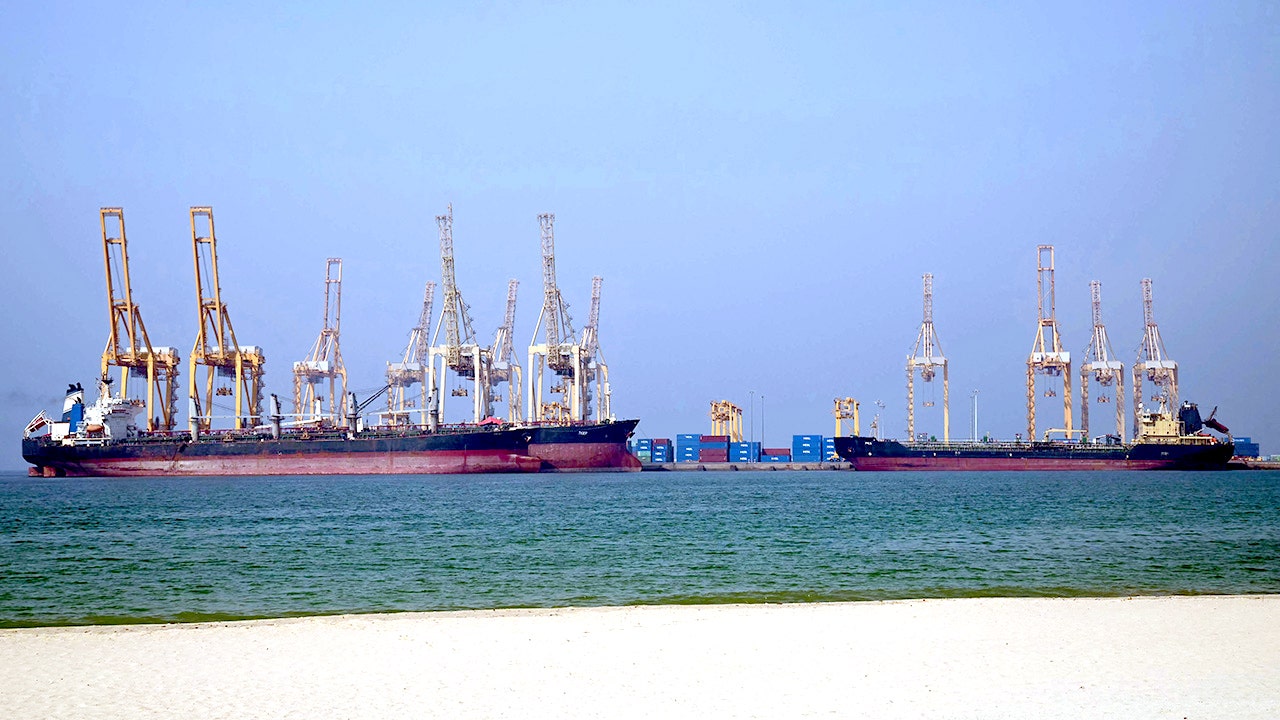
Energy prices hit a four-year high in March amid the Iran war, prompting the closure of the Strait of Hormuz, which is a chokepoint through which about 20% of the world’s oil supply passes through aboard tankers.
The New York Fed’s analysis finds that high-income households increased their nominal spending on gasoline the most and kept their real consumption at a level that was essentially unchanged when compared with pre-war spending patterns.
By contrast, low-income households decreased their real consumption of gasoline but also saw sharp increases in their nominal spending because of the higher gas prices, contributing to a so-called K-shaped pattern in gasoline consumption.
GAS PRICES SURGE PAST $4.50 NATIONALLY AS IRAN TENSIONS PRESSURE DRIVERS
The patterns in gasoline consumption are a qualitative match to what played out when energy prices rose in the wake of Russia’s invasion of Ukraine in 2022.
The New York Fed’s report used data from analytics firm Numerator that showed nominal gasoline spending rose over 15% in March, rising from 10% below its 2023 level to 5.5% above that mark.
That increase was driven by gas prices, as real gasoline consumption declined 3%, whereas the Advance Monthly Retail Trade Survey found spending at gas stations rose 14.5% in March.
CHEVRON CEO SAYS ECONOMIES ‘ARE GOING TO HAVE TO SLOW’ AS STRAIT OF HORMUZ CLOSURE DISRUPTS OIL SUPPLY

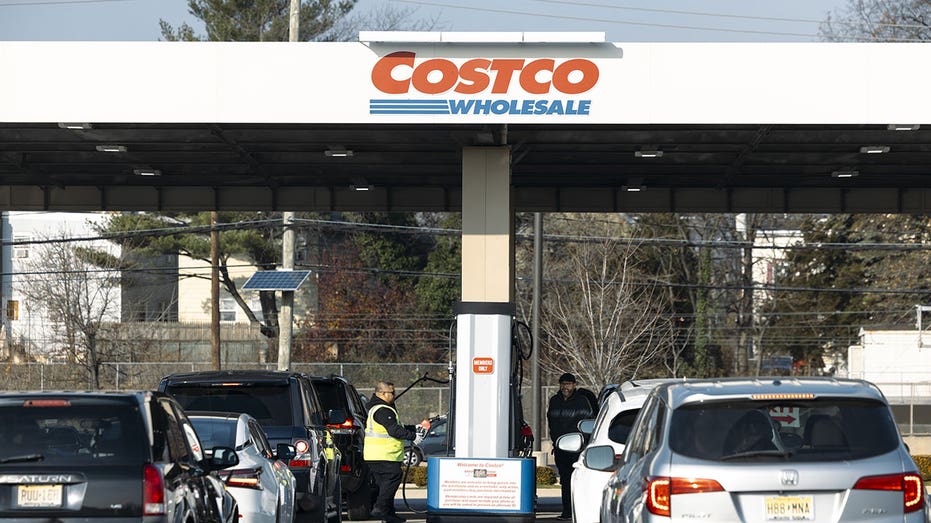
Gas prices also contributed to a K-shaped pattern among income groups, as low-income households increased their spending the least by 12%.
Despite that overall increase, low-income households cut their real gas consumption the most, buying 7% less gas, with higher prices contributing to the overall increase.
Among high-income households, their nominal gas spending rose by 19%, which was the most among the income groups, largely because they reduced their real gas consumption by the least at just a 1% decline.
RISING GAS PRICES ARE CRUSHING RESTAURANT SALES AS $4 A GALLON BECOMES TIPPING POINT FOR CONSUMERS
Middle-income households had moderate increases in nominal spending and decreases in real consumption at gas stations, showing that the K-shaped consumption pattern for both nominal and real gasoline spending prevailed in March 2026.
The New York Fed economists explained that the K-shaped pattern has “opened up much more than before” in comparison to the 2022 shock caused by Russia’s invasion of Ukraine.
“Higher-income households have reduced real gas consumption only modestly and increased gasoline spending considerably compared with 2023,” they explained. “In contrast, lower-income households increased spending by much less and decreased real consumption by much more, potentially by carpooling or substituting to public transit where available.”
Read the full article here